


medicube
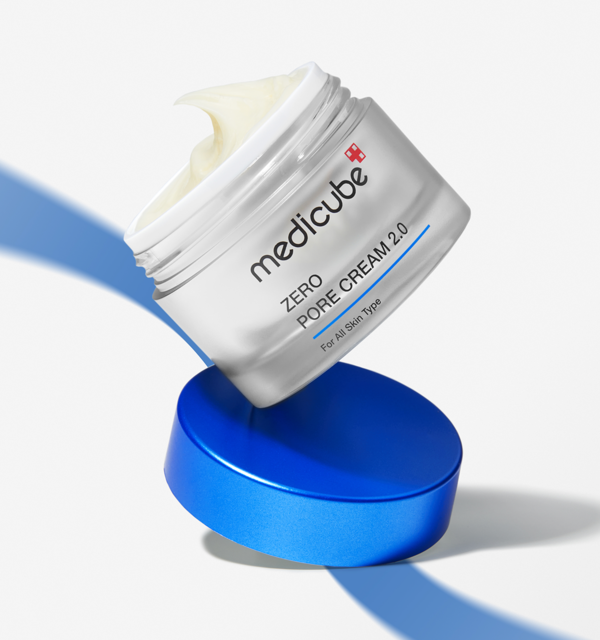
medicube - Zero Pore Cream 2.0 50ml
medicube - Zero Pore Cream 2.0 50ml
No se pudo cargar la disponibilidad de retiro
✓ Ships from Korea & US · Tracked Delivery
✓ Free gift with every order
✓ Easy Returns · Secure Checkout
medicube Zero Pore Cream 2.0 50ml — Korean Moisturizer for Oily and Combination Skin
medicube Zero Pore Cream 2.0 is the closing step of medicube’s Zero line, the range built around pores and blackheads. It does the job most people with oily skin skip — sealing — and then does one more on top: there is glycolic acid high on the ingredient list, which quietly makes this a mildly exfoliating moisturizer rather than a plain one.
That is the thing worth knowing before you buy. Most creams marketed at pores are inert and rely on hydration alone. This one carries an AHA, so it keeps working on surface texture after it has sealed everything underneath it.
What Zero Pore Cream 2.0 Does
- Seals the routine. Everything applied before it — toner, serum, all that water — leaves the skin within a few hours unless something holds it there. That is what a cream is, and it is why skipping it makes oily skin worse rather than better.
- Exfoliates gently as it sits. Glycolic acid is the most researched AHA there is. It lifts dead cells off the surface, and a smoother surface is most of what makes pores look smaller.
- Hydrates at three molecular weights. Hyaluronic acid, sodium hyaluronate and hydrolyzed hyaluronic acid are all in the formula — surface hold plus something that goes a little deeper.
- Finishes matte, not slick. The emulsifier system is built for skin that does not want a cream. It absorbs instead of sitting on top.
Oily Skin Needs a Moisturizer. Especially Oily Skin.
This is the single most common mistake in an oily routine, so it is worth being blunt. Skin that feels oily and tight at the same time is not oily — it is dehydrated. It is producing oil precisely because it has no water. Skip the cream and you remove the water while leaving the oil problem intact, and skin answers by making more.
The exit from that loop is not a stronger cleanser. It is hydration that stays put. See Hydration Boost and the difference between dehydrated skin and dry skin — probably the most useful thing you can read if your skin shines and feels tight in the same hour.
What It Does for Pores — Honestly
Straight answer: pore size is largely genetic, and no cream changes it. What this one contributes is indirect but real. Well-hydrated, gently exfoliated skin has a smoother surface, and a smooth surface reflects light evenly instead of scattering it across every pore edge. Rough, dehydrated skin makes pores look more obvious than they are. Fix the surface and the same pores read smaller.
Anything promising to shrink a pore with a moisturizer is selling. The whole line and the myths around it are unpacked in our Zero Pore guide.
Who Zero Pore Cream 2.0 Is For
- Oily and combination skin that has been avoiding creams — this is the light one that changes that habit
- Skin that goes shiny by midday but feels tight after cleansing
- Anyone who wants a pore cream that also works on texture, not just hydration
- Acne-prone skin looking for something to seal a routine without adding weight
Browse Smooth & Pore Refining Skin and Acne-Prone Skin. Shop the full medicube range.
Two notes before you buy. The formula contains fragrance, so patch test if you are fragrance-reactive — see Sensitive Skin for gentler options. And it contains beeswax, so it is not vegan.
Key Ingredients in medicube Zero Pore Cream 2.0
- Glycolic Acid (AHA) — the most researched exfoliating acid in skincare. It lifts dead cells off the surface to reveal smoother skin underneath. This is the ingredient that separates Cream 2.0 from an ordinary pore moisturizer.
- Hyaluronic Acid, Sodium Hyaluronate and Hydrolyzed Hyaluronic Acid — three forms at three molecular weights. More in our hyaluronic acid guide.
- Panthenol and Allantoin — the soothing pair that buffers the acid.
- Camellia Japonica Flower Extract — high on the list, softening the finish.
- Olive-derived emulsifiers (Cetearyl Olivate, Sorbitan Olivate) — they build barrier-friendly liquid crystal structures rather than just holding oil and water together.
- Tocopherol (Vitamin E) and Cinnamomum Zeylanicum Bark Extract — the antioxidant side.
- Alcohol-free. No denatured alcohol anywhere in the formula.
Texture, Scent and Finish
Light and fast-absorbing, and this is where the formulation work shows. The fatty-alcohol and sugar emulsifier system is the one manufacturers reach for specifically when they want a matte, non-greasy finish on oily skin — it gives a cream that vanishes rather than one that sits.
Silicones (dimethicone, cyclopentasiloxane) handle the slip, so it goes on silky and layers cleanly under sunscreen and makeup with no pilling. There is a light fragrance. The finish is soft and matte-leaning, never tacky.
Why You’ll Love It
- It is two steps in one. A moisturizer that carries an AHA is doing texture work while it seals. Most pore creams are passive.
- Built for people who hate creams. The matte, evanescent finish is a formulation choice, not a marketing line.
- Triple hyaluronic acid. Not one token form.
- Alcohol-free. Rare in the oily-skin category, where drying alcohol is the lazy way to fake a matte finish.
- Honest about pores. It clears and smooths. It does not shrink, and we are not going to tell you it does.
How to Use medicube Zero Pore Cream 2.0
- Apply as the final skincare step, after toner and serum.
- Warm a pea-sized amount between your fingertips — start smaller than you think.
- Press it over the face rather than dragging it across the skin.
- In the morning, let it settle for a minute, then apply sunscreen. This is not optional: the formula contains an AHA.
- Use morning and night. If you are also using an acid toner or pads, alternate at first rather than stacking both daily.
- If you are oily in the T-zone but dry on the cheeks, go thinner where you shine and heavier where you do not.
How to Add It to Your Routine
Cleanse → tone → serum → this → sunscreen in the morning. Last step of the skincare, and the one that makes the others count.
Browse Korean Moisturizers, plus Korean Cleansers, Korean Toners and Korean Serums. Daily SPF is part of the deal here — see Korean Sunscreen.
Pairs naturally with niacinamide for sebum and texture, and with hyaluronic acid layered underneath. For the even, non-shiny finish most people are chasing, see Glass Skin & Glow.
Zero Pore Cream 2.0 vs Zero Pore One Day Cream — they split the problem in half. This one runs glycolic acid, an AHA that works on the surface: pick it if the complaint is rough texture. The One Day Cream runs niacinamide and salicylic acid, a BHA that is oil-soluble and works inside the pore: pick it if the complaint is shine and congestion. One or the other, not both — running two acid creams at once is how a barrier gets wrecked.
Read First
How to build the right routine for your skin type and Korean skincare ingredients explained cover the basics. If shine comes with breakouts, how to treat acne without destroying your skin barrier. Doing everything and seeing nothing? Why your routine isn’t working.
Compartir
Ingredients
How to Use
2. Warm a pea-sized amount between your fingertips — start smaller than you think.
3. Press it over the face rather than dragging it across the skin.
4. In the morning, let it settle for a minute, then apply sunscreen. This is not optional — the formula contains glycolic acid, an AHA.
5. Use morning and night. Consistency matters more here than quantity.
6. If you are also using an acid toner or exfoliating pads, alternate at first rather than stacking both every day.
7. If you are oily in the T-zone but dry on the cheeks, go thinner where you shine and heavier where you don't.


Frequently Asked Questions
I have oily skin. Do I really need a moisturizer?
Yes — and this is the most common mistake in an oily routine. Skin that is oily and tight at the same time is dehydrated: it is producing oil because it has no water. Skipping the cream removes the water and leaves the oil, and skin responds by making more. Use something light rather than nothing.
Does medicube Zero Pore Cream 2.0 contain acids?
Yes. Glycolic acid sits high on the ingredient list, which makes this a mildly exfoliating moisturizer rather than a purely sealing one. Two things follow from that. If you are already using the Zero Pore Toner or an acid pad, do not run both at full frequency from day one — alternate until you know how your skin takes it. And wear sunscreen every morning, because glycolic acid is an AHA and AHAs make daily SPF non-negotiable.
Can a moisturizer shrink pores?
No. Pore size is largely genetic and no cream changes it. What a cream does contribute is a smoother surface — and smooth skin reflects light evenly instead of scattering it across every pore edge, so the same pores read smaller. Real effect, honest mechanism.
Will a cream clog my pores?
A cream that is too heavy for your skin can sit on the surface and feel congesting, which is why texture matters more than the category. This one is formulated for oily and combination skin and absorbs rather than sitting on top. Start with a pea-sized amount and go thinner over the T-zone.
Should I use it in the morning as well as at night?
Both. Skin loses water around the clock, and the barrier responds to consistency rather than to a heavier product used occasionally. In the morning, let it settle, then apply sunscreen.
Can I wear it under makeup?
Yes. Give it a minute or two to absorb first, then sunscreen, then makeup. Applied too thickly, any cream will pill under foundation — that is a quantity problem, not a product one.
Do I still need this if I use a pore serum?
Yes. The serum delivers, the cream keeps it there. Without something to seal it, most of a serum's hydration is gone within a few hours — and an unsealed acid or pore step is the one most likely to leave skin feeling tight.