


APLB
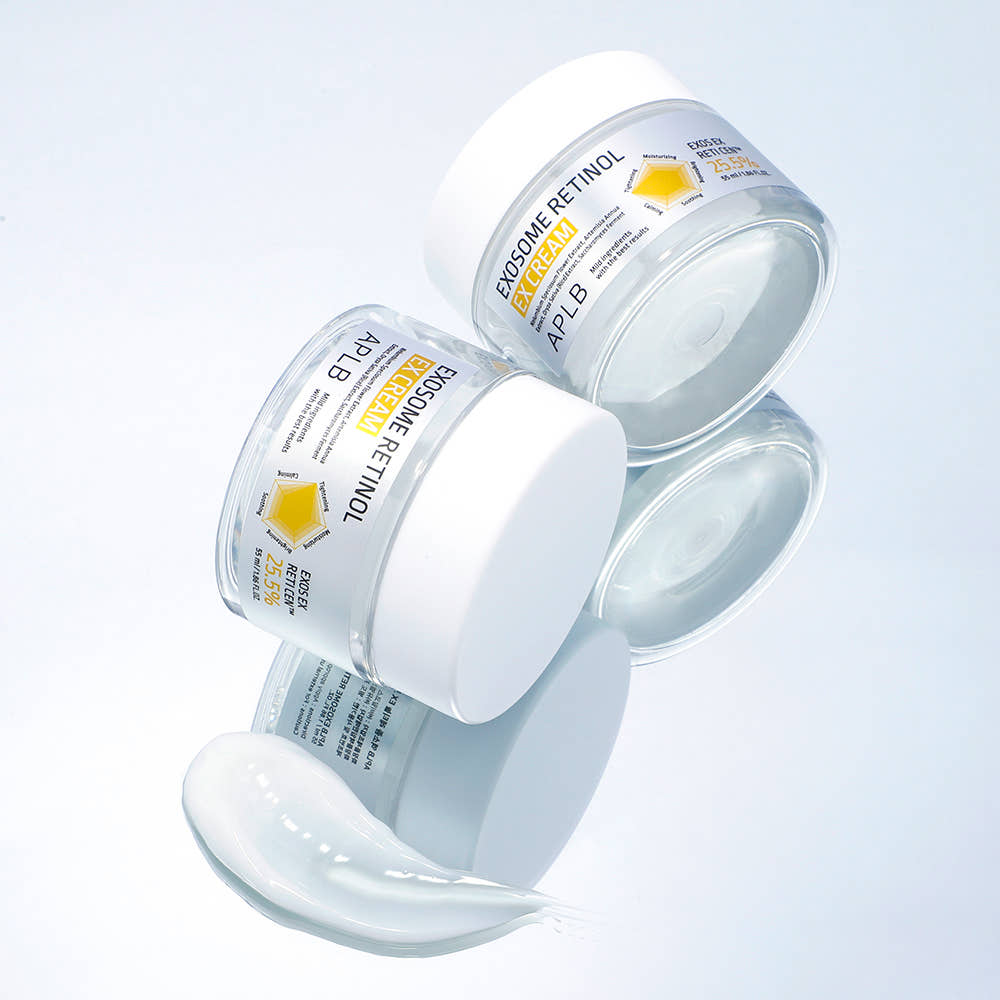
APLB - Exosome Retinol EX Cream 55ml
APLB - Exosome Retinol EX Cream 55ml
Couldn't load pickup availability
✓ Ships from Korea & US · Tracked Delivery
✓ Free gift with every order
✓ Easy Returns · Secure Checkout
Retinol, softened. The APLB Exosome Retinol EX Cream carries a 25.5% exosome-retinol-centella complex in a fragrance-free base built at a mildly acidic pH close to healthy skin. The centella side is doing real work here — it is what lets a retinol cream feel like a comfortable daily moisturizer rather than something you brace for.
What It Does for Your Skin
- Supports firmer-looking skin — retinol is the best-evidenced ingredient for improving the look of fine lines and texture over time.
- Smooths the look of texture — gradual renewal rather than aggressive resurfacing.
- Calms as it works — a centella complex cushions the retinol, which is where most retinol products fall down.
- Moisturizes properly — it is a genuine cream, not a thin treatment you need to layer over.
Who It Is For
Suited to anyone noticing first fine lines, loss of firmness or rough texture, and to retinol beginners who found other formulas too harsh. Sensitive skin can often manage it thanks to the centella base — patch test and start slowly. Not recommended during pregnancy or breastfeeding; ask your doctor.
Key Ingredients and Honest Notes
- Retinol — worth knowing: retinol is not the same as retinal. Retinal (retinaldehyde) sits one conversion step closer to the active form skin uses and often works faster; retinol takes an extra step and is gentler. This is the gentler of the two.
- Exosome complex — in cosmetics, exosome is a formulation trend rather than a clinical one. Here it means an extract prepared at a very fine particle size, which is a different thing entirely from the exosome procedures offered in dermatology clinics.
- Centella Asiatica and a triple centella complex — soothing support that makes nightly retinol far more tolerable.
- Shea butter, macadamia oil and squalane — the emollients that give this its proper cream texture.
- Beeswax — worth flagging: this formula contains beeswax, so it is not vegan. If you avoid animal-derived ingredients, look at a plant-based retinol instead.
- Fragrance-free base — no added parfum. Note that the tea tree leaf extract carries naturally occurring linalool and limonene, which very fragrance-sensitive skin may still notice.
Texture and Finish
A proper cream that still spreads easily and absorbs without heaviness. It finishes soft and natural rather than greasy, so it works as your final night step without a pillow-print.
What to Expect
Comfort and hydration are immediate. Retinol itself is slow by nature — smoother texture usually appears around four to eight weeks, and changes in fine lines and firmness take twelve weeks or more of consistent use. Some dryness or flaking in the first weeks is normal; scale back frequency rather than pushing through. Daily sunscreen is not optional while using retinol.
Where It Fits in Your Routine
This is a night step — the last one, after toner and serum. Start once or twice a week and build up as skin adjusts. Keep retinol nights simple: no acids, no scrubs. Every morning, wear sunscreen. Explore more in Retinol, Anti-Aging & Firming and read our anti-aging guide.
Every product at K-Touch is 100% authentic, sourced from verified Korean distributors. Most orders ship directly from Korea, fresh and factory-sealed; some ship from our US warehouse — always with tracking, to the US and worldwide.
Share
Ingredients
How to Use
Start once or twice a week and build up as your skin adjusts.
Apply to dry skin; buffer with moisturizer first if you are sensitive.
Keep retinol nights simple — no acids or scrubs.
Wear sunscreen every morning. Avoid during pregnancy or breastfeeding.


Frequently Asked Questions
Is this retinol or retinal?
This is retinol, not retinal. They are related but not the same: retinal (retinaldehyde) sits one conversion step closer to the active form skin uses and often works faster, while retinol takes an extra step and tends to be gentler. Retinol is the friendlier starting point if you are new to retinoids.
How do I start retinol without irritation?
Start low and slow. Use it once or twice a week at night, on dry skin, and build up as your skin adjusts. Buffer it by applying a calming toner or moisturizer first. Never apply retinol to a stinging or compromised barrier, and keep the rest of that night simple — no acids, no scrubs.
Can I use it in the morning?
Retinol is best used at night. It can make skin more sensitive to sunlight, so daytime use asks for trouble unless you are extremely diligent with sunscreen. Either way, wearing SPF every morning is essential while using any retinoid — it protects the progress you are making.
Can I use retinol while pregnant or breastfeeding?
Retinoids are generally avoided during pregnancy and breastfeeding, and this is a question for your doctor rather than a skincare shop. If you want a gentler alternative in the meantime, peptides, niacinamide and bakuchiol are commonly chosen instead.
Can sensitive skin use this cream?
Often yes, carefully. The centella complex and fragrance-free base make it gentler than many retinol products, but retinol still asks something of your skin. Patch test, begin once a week, and if it does not settle after a few weeks, peptides are a gentler route to similar goals.