


medicube
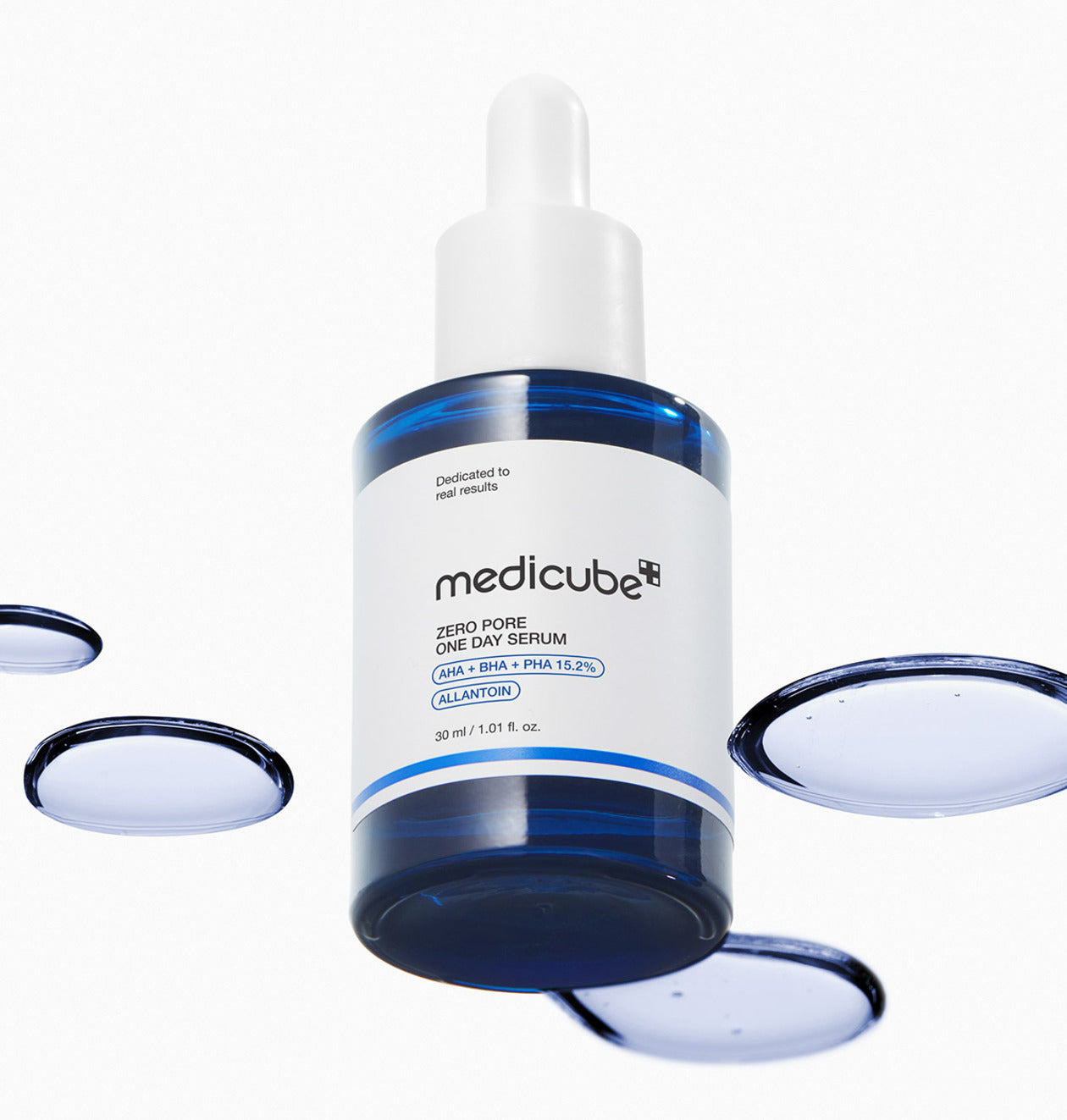
medicube - Zero Pore One Day Serum 30ml
medicube - Zero Pore One Day Serum 30ml
Impossible de charger la disponibilité du service de retrait
✓ Ships from Korea & US · Tracked Delivery
✓ Free gift with every order
✓ Easy Returns · Secure Checkout
medicube Zero Pore One Day Serum 30ml — Korean Pore Serum with Niacinamide, AHA, BHA and PHA
medicube Zero Pore One Day Serum belongs to medicube’s Zero line, the range the brand builds specifically around pores and blackheads. Its job is narrow and it does not pretend otherwise: a lightweight, watery serum that sits between toner and moisturizer and works on how pores look — the shine around them, the roughness between them, the plugs inside them.
The “One Day” is about cadence, not about a promise. This is the step designed to be repeated every day rather than deployed as a weekly treatment, and pore care is where that distinction matters most. A strong mask once a fortnight loses to a mild serum every night, every time.
What Zero Pore One Day Serum Does
- Clears the plug inside the pore. The BHA is oil-soluble, so it travels down to where sebum actually sits. A blackhead looks black because hardened sebum has oxidized at the opening — dissolve it and the pore reads smaller.
- Smooths surface texture. The AHA lifts dead cells off the top. Rough skin scatters light across every pore edge; smooth skin reflects it evenly.
- Stays tolerable. The PHA is the large, slow, gentle acid — it is why building to daily is realistic here rather than aspirational.
- Handles the sebum side. Niacinamide, the standard active for excess oil and uneven tone, runs alongside the acids.
What a Pore Serum Can and Can’t Do
Worth being straight about this, because most pore marketing isn’t. Pore size is largely genetic. No serum changes the diameter of the opening in your skin. Anyone who tells you otherwise is selling.
What does change is how visible the pore is, and that turns out to be most of what people actually want. A pore filled with hardened sebum reads darker and wider than the same pore cleared out. Skin with rough surface texture scatters light and makes every pore around it more obvious; smooth skin reflects light evenly and the same pores fade back. That is the mechanism this serum works on, and it is a real, visible difference — just an honest one. Our complete Zero Pore guide goes through it properly.
Key Ingredients in medicube Zero Pore One Day Serum
- Niacinamide — the most reliable active there is for sebum, tone and texture. More in our complete niacinamide guide.
- BHA (salicylic acid) — oil-soluble, so it works inside the pore rather than only across the top of it. This is the blackhead ingredient.
- AHA (glycolic and lactic acid) — surface exfoliation, aimed at rough texture and dullness.
- PHA (gluconolactone) — large molecule, slow and gentle. The reason a careful daily build-up is possible.
- Three acid depths, one bottle. Most pore serums run a single acid and land either too weak or too harsh.
Texture Is the Whole Argument
A pore serum that sits tacky on the skin defeats itself. Anything sticky gets skipped in the morning, and a step you skip does nothing at all.
This one is watery and absorbs fast — closer to water than to an essence — which is what makes it viable under sunscreen and makeup rather than a night-only product. It leaves a fresh, non-sticky finish with nothing to pill under foundation.
Who Zero Pore One Day Serum Is For
- Skin that goes shiny through the T-zone by lunchtime
- Pores around the nose that look packed rather than empty
- Rough texture that you can feel under a fingertip even when there is nothing to squeeze
- Anyone who wants an exfoliating serum they can use daily rather than a weekly treatment
Browse Smooth & Pore Refining Skin and Acne-Prone Skin. Shop the full medicube range.
If your skin runs oily and tight at once, that is dehydration, not oiliness — it is making oil because it has no water. Stripping it harder is the loop; hydrating it is the exit. See Hydration Boost and the difference between dehydrated skin and dry skin.
Why You’ll Love It
- Three acids at three depths. Inside the pore, on the surface, and a gentle one for tolerance.
- Niacinamide is in there too. Exfoliation plus sebum control, not one or the other.
- The texture makes it a habit. Watery and fast is what turns a serum from a good intention into a daily step.
- Built for repetition, not for a weekend. Pore care rewards consistency more than intensity.
- Honest about pores. It clears and smooths. It does not shrink, and we are not going to tell you it does.
How to Use medicube Zero Pore One Day Serum
- Apply after cleansing and toner, while skin is still slightly damp.
- Dispense two or three drops into your palm — that is a full face. More is not better with a serum.
- Press it over the face, spending a little longer on the nose, chin and anywhere pores look congested.
- Wait until it has almost absorbed, then follow with moisturizer to seal it in.
- Use morning and night. If your skin is sensitive or new to acids, start every other night and build up.
- If you are also running an acid toner or exfoliating pads, alternate at first rather than stacking everything daily.
- Wear sunscreen every morning — it is what keeps the texture work from sliding backwards.
How to Add It to Your Routine
Cleanse → tone → this → moisturizer → sunscreen. A serum is the concentrated middle of the routine, not the end of it — it needs sealing or most of its work walks off.
Browse Korean Serums, and for the steps around it, Korean Cleansers, Korean Toners and Korean Moisturizers. Daily SPF is part of the deal with any acid — see Korean Sunscreen.
The natural partner for pore work is niacinamide, already in this formula and worth layering more of, and hyaluronic acid underneath covers hydration. For the smooth, even finish most people are chasing, see Glass Skin & Glow.
Zero Pore One Day Serum vs Zero Pore Serum 2.0 — they answer different complaints. This one is acid-based and watery, aimed at rough texture and visible pores. Serum 2.0 is milky, botanical and acid-free, aimed at shine and sebum. If texture is the problem, start here. If you’re unsure which serum belongs in your routine at all, our guide to which serum you actually need is the shortest way to decide.
Read First
Start with how to build the right routine for your skin type and Korean skincare ingredients explained. If pores come with breakouts, read how to treat acne without destroying your skin barrier and the best Korean routine for acne-prone skin. And if you’ve been doing everything and nothing is moving, why your routine isn’t working.
Partager
How to Use
2. Dispense two or three drops into your palm — that is a full face. More is not better with a serum.
3. Press it over the face, spending a little longer on the nose, chin and anywhere pores look congested.
4. Wait until it has almost absorbed, then follow with moisturizer to seal it in.
5. Use morning and night. If your skin is sensitive or new to acids, start every other night and build up.
6. If you are also using an acid toner or exfoliating pads, alternate at first rather than stacking everything daily.
7. Wear sunscreen every morning — it is what keeps the texture work from sliding backwards.


Frequently Asked Questions
Can a serum actually shrink my pores?
No, and treat any product that claims it can with suspicion. Pore size is largely genetic. What a pore serum changes is how visible the pore is — a pore cleared of hardened sebum reads smaller and lighter than the same pore packed full, and smoother surrounding texture stops scattering light and making every pore obvious. That is a real, visible difference. It is just not the same as changing the pore.
Does medicube Zero Pore One Day Serum contain acids?
Yes — three kinds, plus niacinamide. AHA works on the surface, BHA is oil-soluble so it gets down inside the pore where sebum sits, and PHA is the large, slow, gentle one that suits skin which reacts to the other two. Niacinamide handles sebum and tone alongside them. Two consequences: wear sunscreen every morning, and if you are also using an acid toner or pads, alternate at first rather than running everything daily.
What is the difference between the One Day Serum and Serum 2.0?
Cadence and focus. The One Day Serum is the light, fast, daily one — built to be repeated. Serum 2.0 is milkier and weighted toward sebum and shine. If rough texture and visible pores are your issue, start with the One Day. If midday shine is the complaint, look at 2.0.
Morning, night, or both?
Both, once your skin is used to it. If your skin is sensitive or new to exfoliating steps, start every other night and build up from there. Consistency beats intensity in pore care by a wide margin.
Do I still need a moisturizer after it?
Yes. A serum is the concentrated middle of a routine, not the end. Without something to seal it, most of the hydration evaporates off within a few hours.
Will it feel sticky under makeup?
It shouldn't — the texture is watery and absorbs quickly, which is the point. If any serum feels tacky, you are almost certainly using too much. Two or three drops is a full face.
My skin is oily but feels tight. What’s going on?
That is dehydration, not oiliness. Skin low on water produces more oil to compensate, so the instinct to strip it harder makes it worse. Hydrate it and the oil usually settles down.